The sun had barely risen over the Virginia countryside on June 3, 1864, when tens of thousands of Union soldiers fixed their bayonets and prepared to charge. They had done this before — at the Wilderness, at Spotsylvania, at a dozen smaller engagements that had bled the Army of the Potomac across the spring. But today was different. The night before, many of the men did something that stopped their officers cold: they pinned scraps of paper to the backs of their coats. Names. Home addresses. The names of people to notify.
They knew what was coming. Like obedient soldiers, they charged anyway.
Then, in just a few minutes, the Union Army suffered somewhere between 7,000 and 13,000 casualties in a little place called Cold Harbor. Confederate losses were significantly lower — perhaps 1,500. The earthworks Lee’s army had spent the night reinforcing proved nearly impenetrable. Men fell in rows. Officers went down beside their soldiers. Some units were effectively destroyed before they had advanced a hundred yards.
It was, by almost any measure, one of the most catastrophic hours in American military history. And yet Cold Harbor occupies a strange, undersized place in our collective memory — squeezed between the more famous horrors of Gettysburg, Vicksburg, Shiloh, and Appomattox. Most people have never heard of Cold Harbor. Even those who consider themselves students of the Civil War rarely visit.
That needs to change. Not because Cold Harbor is the bloodiest battle of the war — it is not — but because it is one of the best examples of the emotional and practical costs of war that are ignored by those who make the decisions. It is a moral reckoning. And it still demands something of us today.
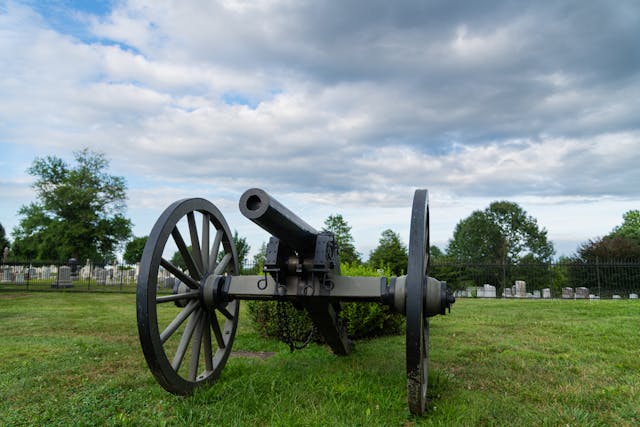
The Road to Cold Harbor: How Two Armies Arrived at the Crossroads
To understand Cold Harbor, you have to understand the spring of 1864 — one of the most brutal sustained military campaigns in American history.
Ulysses S. Grant had been appointed commander of all Union armies in March of that year, and he brought with him a strategy that was as simple as it was devastating: relentless pressure. Rather than maneuvering for position and retreating to regroup as previous commanders had done, Grant intended to stay in contact with Lee’s Army of Northern Virginia and grind it down through attrition. The Union had more men, more supplies, and more industrial capacity. Grant intended to use every advantage.
What followed was six weeks of nearly continuous combat. At the Battle of the Wilderness in early May, the two armies tore at each other through dense undergrowth so thick that men could not see the soldiers they were killing. The woods caught fire, and wounded men burned alive where they fell. Fighting at the “Bloody Angle” became so savage and close that soldiers stabbed at each other through gaps in the earthworks for nearly twenty hours straight. Men stood on the bodies of the fallen to keep fighting. At the end of the day, there were 17,000 casualties from both sides.
By the time both armies arrived at Cold Harbor in late May, they had been fighting for the better part of a month. Grant’s forces had suffered roughly 50,000 casualties. Lee’s army had suffered perhaps half that number, but Lee had no meaningful reserves to draw from. The Union could replace its losses, at least in body count. The Confederacy increasingly could not.
And what seems to be overlooked by all generals, is that the men on the ground — Union and Confederate alike — were not statistics. They were farmers from Ohio and merchants from Georgia, immigrants who had barely learned English and men whose families had lived in Virginia for generations. Most of them were young. They were exhausted. They had watched friends die in numbers that should have been unimaginable, and they kept marching.
It is important to hold onto that humanity. The Civil War is sometimes discussed in the abstract language of strategy and ideology — and those things matter enormously, particularly the moral catastrophe of slavery that lay at the war’s heart. But Cold Harbor is, first and foremost, a story about human beings placed in an impossible situation by forces larger than themselves. Understanding that is the beginning of understanding what we owe them.
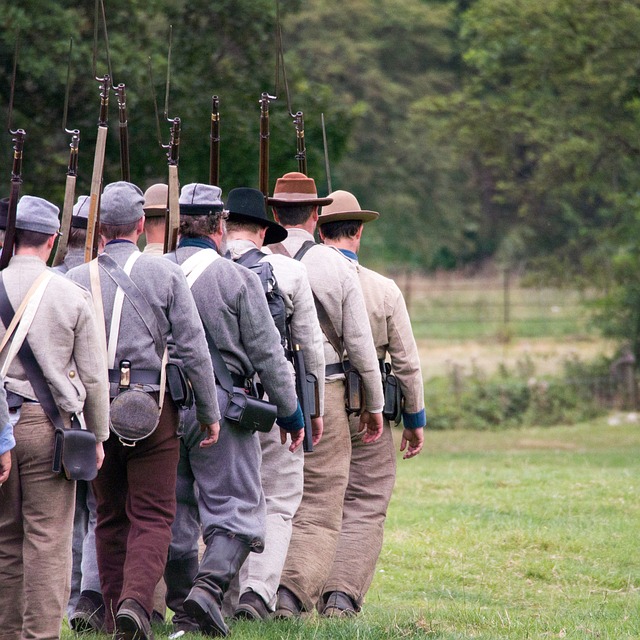
The Battle Itself: Thirty Minutes That Defined the Horror of War
Confederate General Robert E. Lee had chosen his ground well. The Cold Harbor crossroads, a few miles northeast of Richmond, sat at a strategically critical position, and Lee’s engineers had spent the night of June 2nd turning it into a killing field. The Confederate earthworks — trenches reinforced with logs, with carefully designed fields of fire that allowed defenders to pour converging volleys into any approaching force — stretched for miles. In some places, the Confederate line bent and curved in ways that meant attackers would be hit from multiple directions simultaneously. It was, in the grim language of military engineering, elegant. It was also, in every human sense, monstrous.
Grant ordered a massive assault along the line at 4:30 in the morning on June 3rd. Three corps would attack simultaneously, he believed, preventing Lee from shifting forces to meet any single threat. It was, on paper, a sound application of the Union’s numerical advantage.
It failed almost immediately.
The Union soldiers who survived left accounts of what those first minutes were like. They described advancing into a wall of fire — rifles, artillery, and canister shot tearing through their ranks before they had covered a fraction of the ground between themselves and the Confederate works. Units that had trained for years, that had survived the Wilderness and Spotsylvania, simply ceased to exist as coherent fighting forces. Some men reached the Confederate earthworks and were killed on top of them. Most never got close.
General Evander Law, a Confederate brigade commander, wrote afterward that the attacking Union forces “were subjected to a fire which no troops could long endure.” A Union officer described watching his men fall “like rows of wheat before the scythe.” The imagery is almost too tidy for what those men actually experienced — the noise, the smoke, the screaming, the incomprehensible randomness of who lived and who did not.
In less than an hour, the main assault was effectively over. Some local fighting continued through the day, but the catastrophic charge that has defined Cold Harbor in history was finished by breakfast time. The Union had gained almost nothing. The dead and wounded lay in the open ground between the lines, under a Virginia sun that would grow brutally hot as the day wore on.
What followed was, in some ways, as horrifying as the battle itself. Grant and Lee spent the next several days in a grim negotiation over the terms of a truce that would allow the wounded to be retrieved. Military protocol and pride on both sides consumed days in that negotiation while men who might have been saved died of thirst and exposure in the field. By the time Union stretcher-bearers finally reached the wounded, most had died. Of the hundreds of men still alive in the field when the truce was finally arranged, accounts suggest that only a handful could still be saved.
Grant, who was not a man given to public second-guessing, addressed Cold Harbor directly in his memoirs. “I have always regretted that the last assault at Cold Harbor was ever made,” he wrote. It is one of the most honest sentences in the memoir literature of American military commanders — and one of the saddest.
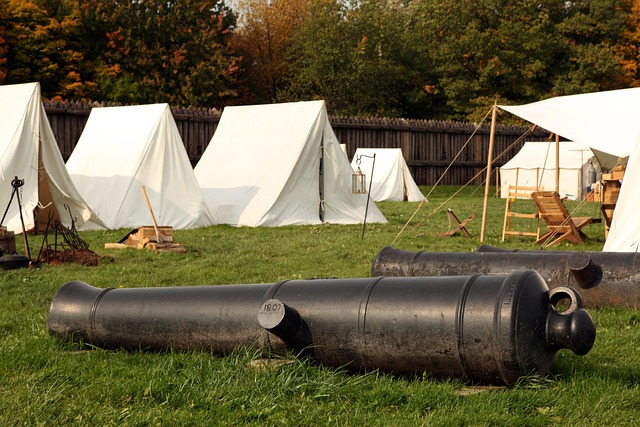
Leadership, Decision-Making, and the Weight of Command
It is tempting, when confronting a disaster like Cold Harbor, to look for a villain. Grant ordered the charge. Grant was wrong. Case closed.
But that reading is both too simple and, in a strange way, too easy. It allows us to locate the horror of Cold Harbor in one man’s mistake rather than in the logic of war itself — and that is a far more uncomfortable place to let it live.
Grant was operating under enormous pressure in the spring of 1864. Lincoln’s reelection was far from certain, and a war-weary Northern public was watching the casualty lists grow with each passing week. There were political forces pushing for a negotiated peace that would have left slavery intact. Grant understood, perhaps better than anyone, that the war had to be won decisively and relatively quickly, or it might not be won at all. The assault at Cold Harbor was, in part, a product of that pressure — a commander pushing harder than the military situation warranted because the political situation seemed to demand it.
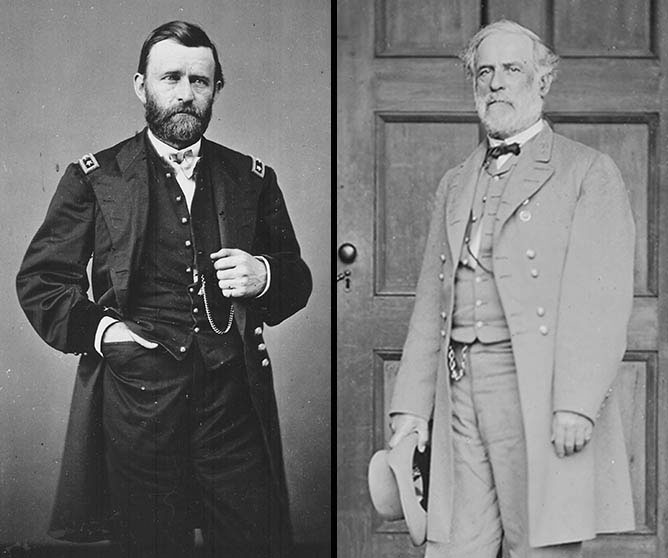
Lee, for his part, made the decisions that any competent commander in his position would have made. He fortified the high ground. He prepared his men. He used the landscape to maximum advantage. His defensive tactics at Cold Harbor were, by the standards of military science, exemplary. They were also responsible for thousands of deaths. Both of those things are true simultaneously, and sitting with that tension is more honest than resolving it too quickly in either direction.
What Cold Harbor ultimately reveals about leadership is something that military historians call the “attrition trap” — the point at which a war’s logic begins to devour its own participants. Both Grant and Lee, by June of 1864, were locked in a system that rewarded the expenditure of human lives and punished restraint. Grant could not stop pressing forward. Lee could not stop defending. The men in between had very little to say about any of it.
That is not an argument for fatalism. It is an argument for examining, very carefully and very seriously, the systems and pressures and ideologies that put leaders in positions where thousands of deaths can feel, in the moment, like reasonable costs. Cold Harbor did not happen because Grant was a bad man. It happened because war, particularly war of attrition, has an internal logic that tends to overwhelm the humanity of everyone caught inside it.
The Ground Remembers: Cold Harbor Today
If you drive out to Cold Harbor today, you will find something that is both quieter and more powerful than you might expect.
The earthworks are still there. That is the first thing that strikes most visitors. After more than 160 years, the trenches that Lee’s men dug on the night of June 2nd are still visible in the landscape, long grassy undulations running through the trees. You can stand in them. You can look out across the open ground toward where the Union forces formed up in the darkness, and you can begin — only begin — to imagine what those men walked into.
The park is modest in scale. There is a small visitor center, some interpretive signs, a network of trails. It does not have the sweeping grandeur of Gettysburg or the heavy commemorative infrastructure of some other major battlefields. In my opinion, that simplicity is appropriate. Cold Harbor is not a place that invites celebration. It is a place that invites stillness.
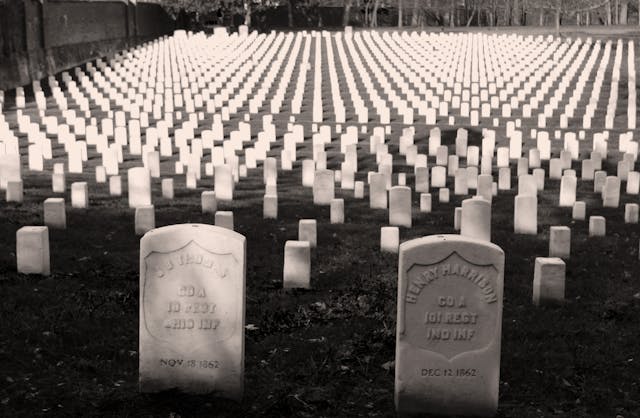
Work to identify and properly honor the dead continues. Many of the Union soldiers killed at Cold Harbor were buried hastily, some in unmarked graves, some never recovered at all. In 1867, three years after the battle at Cold Harbor, the federal government brought in burial crews to identify and reinter the bodies of the dead Union soldiers at the newly created Cold Harbor National Cemetery. Of the 2,100 soldiers buried there, only 1,300 are known. The rest are unidentified.
The work of historical reckoning with those losses — of insisting that each of those men was a person with a name and a story — is ongoing, carried on by historians, genealogists, park rangers, and families who have never stopped looking.
There is something profound about the preserved battlefield as a concept. We might ask why we keep these places — why we maintain fields where terrible things happened rather than building over them and moving on. The answer, at its best, is that preserved battlefields serve as physical evidence against forgetting. You cannot stand in those trenches at Cold Harbor and talk abstractly about the glories of war. The ground will not let you.
What We Owe Them: The Obligation of Memory
Memory is not a passive act. Choosing to remember — choosing what to remember, and how — is a moral decision, one that carries consequences for how we live and what we allow.
For too long, the dominant cultural memory of the Civil War in America has been shaped by narratives that softened its edges: the romantic vision of gallant charges and honorable enemies; the comfortable story in which everyone suffered equally and everyone deserves equal sympathy. Cold Harbor does not fit neatly into any of those narratives. It is too ugly, too wasteful, too obviously the product of human failure on multiple levels.
Honest memory requires us to hold several things at once. The Confederate soldiers who manned those earthworks were, most of them, ordinary men caught in extraordinary circumstances . The Union soldiers who charged across that open ground were brave beyond easy description — but they were also victims of decisions made far above their heads, and bravery does not redeem a poorly planned assault. Grant was a great general and a genuinely humane man who made a decision he later regretted. Lee was a brilliant tactician whose gifts were deployed in service of a terrible cause.
History is rarely clean. Cold Harbor is a case study in that messiness.
What we owe the dead of Cold Harbor is not a particular political conclusion. It is the harder thing: genuine engagement with what happened, why it happened, and what it cost. It is the willingness to sit with the discomfort of a history that does not resolve into easy lessons. It is the refusal to let those thousands of men — the ones who pinned their names to their coats the night before the charge — go unremembered.
We owe them the dignity of being remembered as individuals. And we owe them the honesty of learning what their deaths can teach us.
From Cold Harbor to Peace: The Argument the Battlefield Makes
Cold Harbor makes a powerful argument about the cost of war. And it makes a particular argument about what happens when the mechanisms of diplomacy, empathy, and restraint break down before the fighting starts.
The Civil War did not begin at Fort Sumter. It began in decades of political failure — the failure to find a path toward abolition that did not require the deaths of 620,000 Americans, the failure of leaders on all sides to imagine a future different from the one they inherited, the failure of a nation to reckon honestly with its own founding contradictions before they tore it apart. Cold Harbor is not the origin of that failure. It is one of its consequences.
That is the argument the battlefield makes, if we are willing to hear it: that the price of war is always paid by the people who had the least to do with starting it. The men who pinned their names to their coats on the night of June 2nd did not craft the policies that made the Civil War inevitable. They were farmers and laborers and immigrants and sons who found themselves in a field in Virginia when the sun came up, and they charged because they were ordered to, and many of them died before breakfast.
The commitment to peace — serious, active, costly peace — is not naivete. It is the acknowledgment that the alternative has a price tag that should terrify us. It means investing in diplomacy before tensions become crises, in understanding before misunderstanding hardens into hatred, in the difficult and unglamorous work of addressing grievances before they become wars. It means insisting, in the face of every pressure toward escalation, that human life is sacred.
Cold Harbor will not tell us exactly how to do that. History rarely provides instruction manuals. But it provides something equally valuable: evidence. Evidence of what it looks like when we fail. Evidence of the speed with which failure can kill. Evidence that even intelligent, capable, decent people can be caught inside systems that devour thousands of lives in under an hour.
We can honor Cold Harbor’s dead by letting that evidence change us.
Conclusion: Seven Thousand Reasons
The sun rose again on June 4, 1864, over the same Virginia fields. The dead were still there. The wounded who could be moved had been moved. The armies had settled into the static confrontation that would persist at Cold Harbor for another nine days before Grant finally disengaged and moved south toward Petersburg.
Life continued. The war continued. It would last another ten months, killing tens of thousands more before Lee surrendered at Appomattox Court House in April 1865. The Union was preserved. Slavery was abolished. Those were outcomes worth fighting for — and that truth coexists, uncomfortably, with the truth of what those thirty minutes on the morning of June 3rd actually looked like.
Seven thousand casualties. Perhaps more. Each one a person who woke up that morning, who had eaten whatever breakfast was available, who had thought about home or tried not to, who had sewn a name onto the back of a coat because they knew, somehow, that the world might need to know who they were when it was over.
We know who they were, imperfectly. We know some of their names, some of their stories. We don’t know all of them, and we never will.
What we can do is carry the weight of what Cold Harbor represents into the choices we make about conflict, about leadership, about the systems we build and the pressures we allow to govern them. We can refuse the comfortable distance that turns mass death into abstraction. We can insist on asking, always, what the cost will be — and who will pay it.
The men who died there deserve to be remembered. They deserve to be learned from. And perhaps most of all, they deserve a world that looks at Cold Harbor and decides, with everything it has, to find another way.
Please join us as we walk in this sacred place to remember those who have fallen and what that peace has cost.