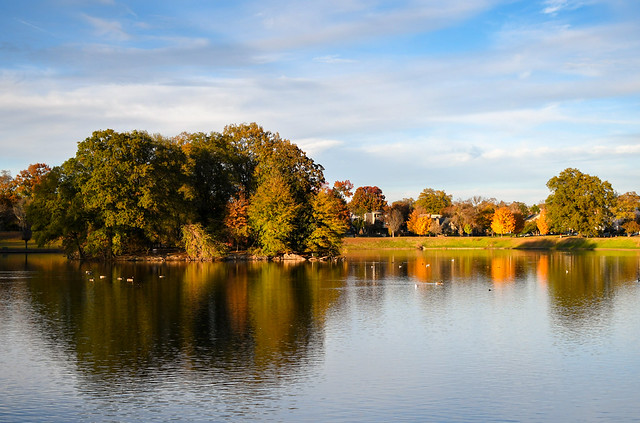
In the heart of Richmond’s Byrd Park, a simple 3-mile walking loop invites us to do something powerful: remember.
At the Virginia War Memorial Carillon and the historic Byrd Park Pump House, the land itself holds stories of profound loss—stories that echo across generations. For those of us who join the Walk for Peace RVA, these sites are more than landmarks. They become mirrors. We walk not to dwell in darkness, but to honor the tragedy, feel its weight, and commit to living differently—so our present can be one of healing, connection, and peace.
This gentle loop—starting and ending at the Carillon, winding through lakes and woods via the Dogwood Dell Trail to the Pump House and back—offers the perfect rhythm for reflection. The paths are shaded and peaceful, the distance manageable for most walkers. Yet every step carries the quiet invitation: See what happened here. Feel it. Then choose peace today.
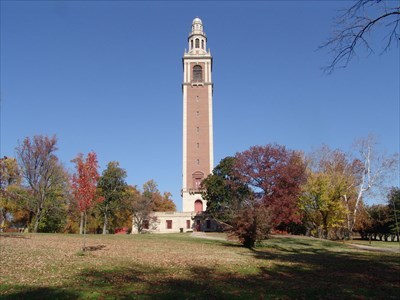
The Carillon: A Tower of Delayed Mourning
Rising 240 feet above the open lawns of Byrd Park stands the Virginia War Memorial Carillon, Virginia’s official tribute to those lost in World War I. Dedicated on October 15, 1932—fourteen long years after the Armistice—the tower honors approximately 3,700 Virginians (soldiers, sailors, marines, nurses, and others) who never returned home. Designed by noted architect Ralph Adams Cram in a graceful Georgian Revival style, its 53 bronze bells were cast in England and funded by public subscription, while the Commonwealth paid for the structure itself.
But the story behind the stone is one of aching delay. Plans for a memorial began in the early 1920s, yet debates over design, site, and funding stretched on. When construction finally started in 1931, the Great Depression had already gripped the nation. Families who had sacrificed loved ones in the trenches of France now faced breadlines and uncertainty while this monument rose. The dedication itself came amid controversy and economic hardship, a bittersweet mix of patriotic pride and lingering grief.
There is no single violent incident tied to the Carillon’s grounds—no ghosts or gruesome tales. Instead, its tragedy is collective and enduring: the silence after the guns fell quiet, the empty chairs at dinner tables across Virginia, and the realization that the “war to end all wars” was followed just nine years later by another global conflict.
The Carillon stands as a solemn reminder that war’s cost ripples far beyond the battlefield. Its bells, which still ring for Memorial Day and Veterans Day concerts, call us to remember those lives cut short—and to question the choices that lead nations and individuals into conflict.
When you pause at its base during your Walk for Peace, read the inscription: “Virginia War Memorial 1917 • 1918.” Let it sink in. In that moment of stillness, the tower becomes a teacher: We have mourned before. What will we do now to prevent more mourning?
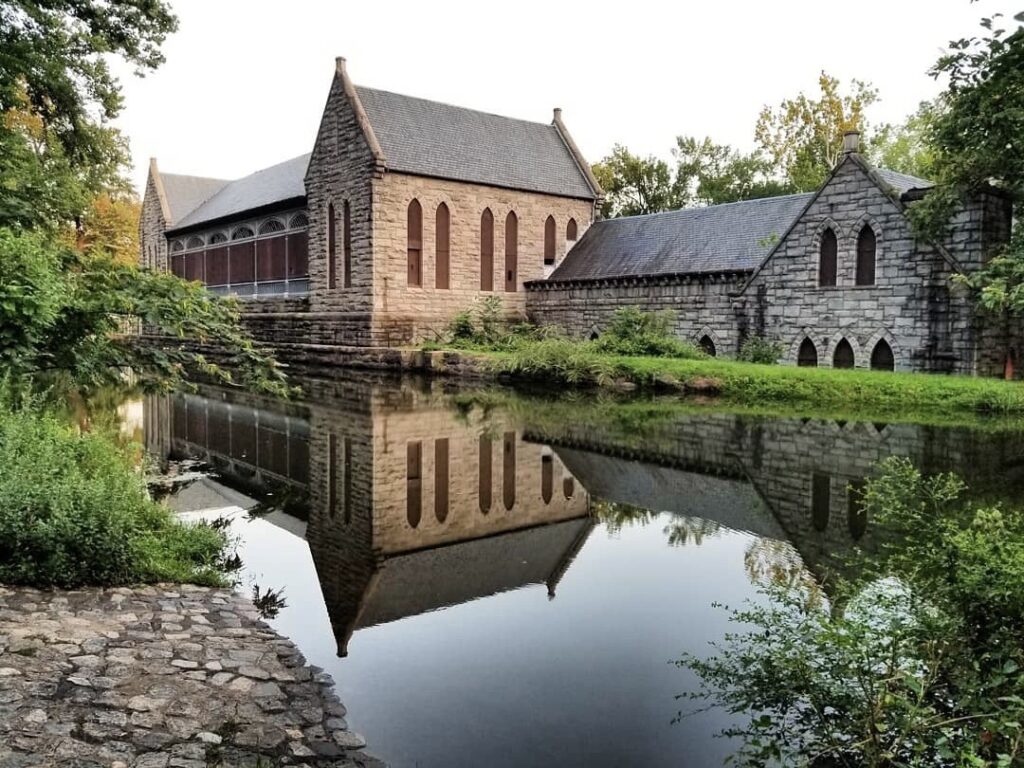
The Pump House: Beauty Built Over Hidden Sorrow
A short wooded walk south along the Dogwood Dell Trail brings you to the Byrd Park Pump House, a striking Victorian Gothic Revival building perched beside the old James River canal locks. Constructed between 1881 and 1883, it was no ordinary utility. City Engineer Col. Wilfred Emory Cutshaw designed it to pump river water uphill to the city reservoir while also featuring a second-floor dance hall—one of the few structures in America that blended industrial function with public celebration.
For decades it powered Richmond’s drinking water system. Yet beneath the elegant stone arches and reflecting pond lies a darker history of isolation and loss. The site’s remote, wooded location—tunnels, drained channels, and quiet paths—drew tragedy over the years. Local records and oral histories speak of numerous drownings, suicides, and unexplained deaths in the reservoir and canal area dating back to the late 19th century.
The most haunting chapter unfolded on a bitterly cold night in April 1954. Forty-five-year-old Mabel Hord, a shoe-company employee and wife from Richmond’s Fan District, ended up at the canal beside the Pump House with a man she had just met. What began as a night out turned violent.
She was beaten, shot in the shoulder as she tried to escape, and left to drown in the freezing, muddy water. Her body was discovered the next morning by a city employee working at the Pump House itself. The perpetrator later confessed; Mabel’s husband never fully recovered. The case, covered in local papers, exposed layers of personal betrayal, alcohol, and desperation in 1950s Richmond.
These stories—along with others of lives lost in the shadows of the canals—give the Pump House a quiet, almost haunted resonance. Its beauty and its sorrow coexist, much like the city itself. Walking its short loop trails today, with the stone building mirrored perfectly in the still water, invites a visceral reflection: How many times have isolation, poor choices, and unhealed pain led to irreversible harm?
The Walk Itself: From Remembrance to Renewal
Connecting these two sites is the roughly 3-mile loop you can follow today: begin at the Carillon, circle the lakes and VITA fitness trail, descend through the peaceful woods of Dogwood Dell, explore the Pump House, and return the same way. The route is flat, shaded in places, and rich with birdsong and the gentle lap of water—ideal for walking mindfully.
For the Walk for Peace RVA community, this path is sacred ground. We do not walk to glorify suffering. We walk to witness it. At the Carillon we remember the scale of war’s devastation and the long years it took Virginia to even begin to honor it. At the Pump House we confront the intimate tragedies that happen when people feel unseen, unsupported, or trapped by their circumstances.
In both places, the message is the same: tragedy is real, but so is our power to choose differently. We can reject violence as a solution. We can build community instead of isolation. We can speak up, seek help, extend grace, and pursue justice with compassion. Each step on this loop becomes a quiet vow: I see the cost of the old ways. Today, I choose peace.
Join the Walk
Next time you lace up your shoes, consider this route in Byrd Park. Start at the Carillon. Feel the weight of 3,700 lost lives. Follow the trail to the Pump House and stand where history turned tragic. Then walk back—lighter, perhaps, but more awake.The past cannot be changed. But the present? That is ours to shape. Walk for peace. Remember the tragedy. And commit, one step at a time, to a different future.
All are welcome. No registration needed. Just show up and walk with intention. The walk starts and ends at the Carillon Saturday, May 9 at 8:15 a.m. We will end in time for the kick off to Rest Fest, so you’re welcome to stay and enjoy the event.