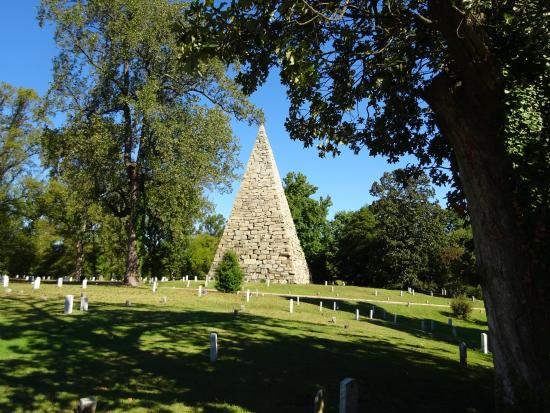
There is a particular kind of silence that settles over certain places — not the silence of emptiness, but the silence of resolved things, finally allowed to rest. You feel it the moment you pass through the iron gates of Hollywood Cemetery in Richmond, Virginia. The holly trees press close. The James River moves below. And something in your pace, almost involuntarily, slows — as if the ground itself is asking you to stop carrying whatever it is you brought in with you.
In 2025 and 2026, nineteen Buddhist monks walked 2,300 miles across America on foot. They were moving through a divided, distracted country with patience and peace, embodying in their shared steps something that words have largely failed to achieve. Reconciliation, the monks understood, is not a destination. It is a practice. Hollywood Cemetery, founded in 1847 on a wooded hillside above the James River, has been quietly teaching the same lesson for nearly two centuries.
A Place Built for Difficult Coexistence
Hollywood Cemetery was designed from the outset as a place where the living and the dead could share the same ground in peace and equality. Its founders commissioned architect John Notman to create not a grid of stone and grief, but a garden — paths that curved, trees that canopied, views of the river that opened unexpectedly. The intention was that people would come here not only to mourn, but to walk, to think, to sit with what they could not yet put into words. It was, in an era before public parks, one of the few places a city offered its people simply to be.
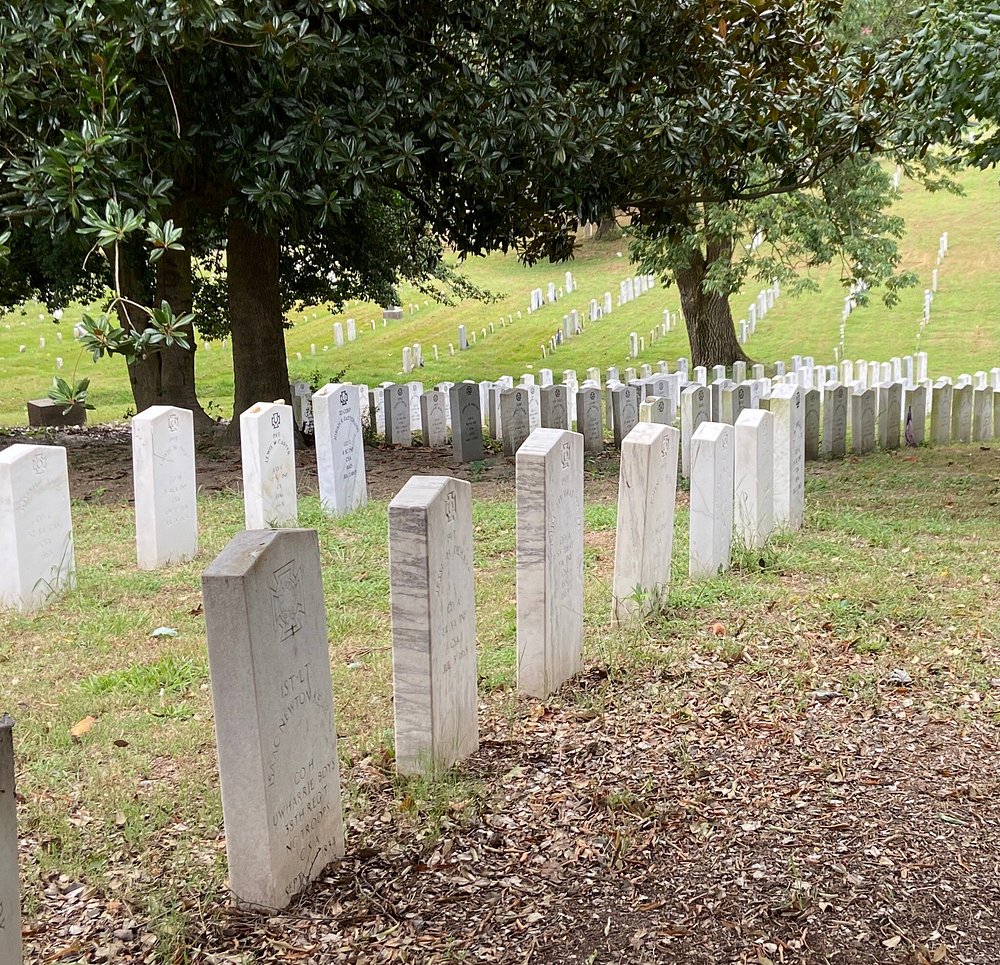
That founding instinct — to make space for presence rather than answers — would be tested within fifteen years of the cemetery’s opening, when Richmond became the capital of the Confederacy and the ground began receiving the dead of a war that tore the country in two. More than 11,000 Confederate soldiers are buried here, many brought from distant battlefields, nearly 3,000 transported from Gettysburg alone. Union soldiers are buried here too. Their graves tended by a federal government that once considered them enemies. The two sides of the war lie within walking distance of one another, as they have for over 150 years, in the same soil, under the same oaks.
What the Ground Holds
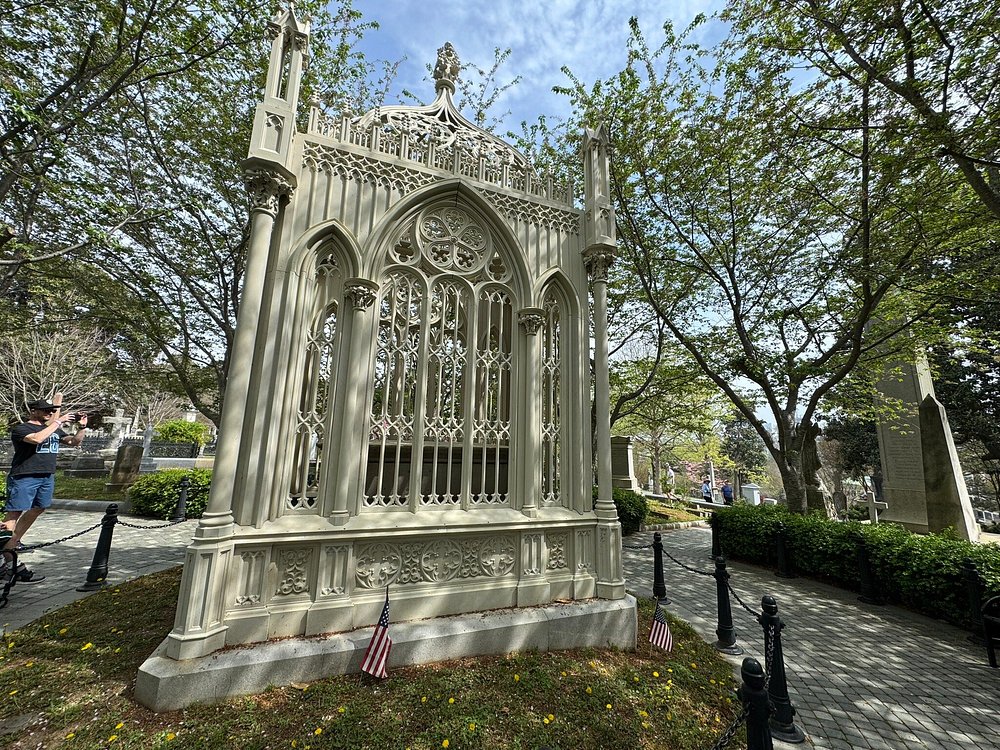
To walk among these graves is not to be asked to agree with the people in them. It is to be asked something harder: to be holistic and hold space for contradictions. A nation’s presidents rest here alongside the president of the government that tried to leave that nation. Soldiers who fought on opposite sides of the same battles lie within earshot of one another. The women of the Hollywood Memorial Association, who in the years after the war organized the care of Confederate graves when no one else would, were themselves an act of grief that the rest of the country found difficult to accommodate. Their devotion was real. So was the cause they mourned. Both things can be true, and this place does not pretend otherwise.
In 2020, Hollywood cemetery’s board quietly banned the public display of the Confederate flag on its grounds — a small but telling gesture. Not an erasure, but a boundary: you may grieve here, you may remember here, but you may not use this place to assert a continuing allegiance to division. It was the kind of careful, imperfect step that reconciliation actually looks like in practice — not a grand gesture, but a redrawing of what this shared ground is for.
Walking as a Way of Making Peace
The nineteen monks who walked across America understood something that is easy to forget: that reconciliation is not primarily a matter of argument. It is a matter of presence. You cannot reason your way into peace with the past. You can only show up to it, repeatedly, with attention and without the expectation of resolution. Their 2,300-mile walk embodied that practice in every step — moving through communities still divided by history, politics, grief, and grievance, not to change minds but to demonstrate that patient, shared passage through difficult ground is itself a form of healing.
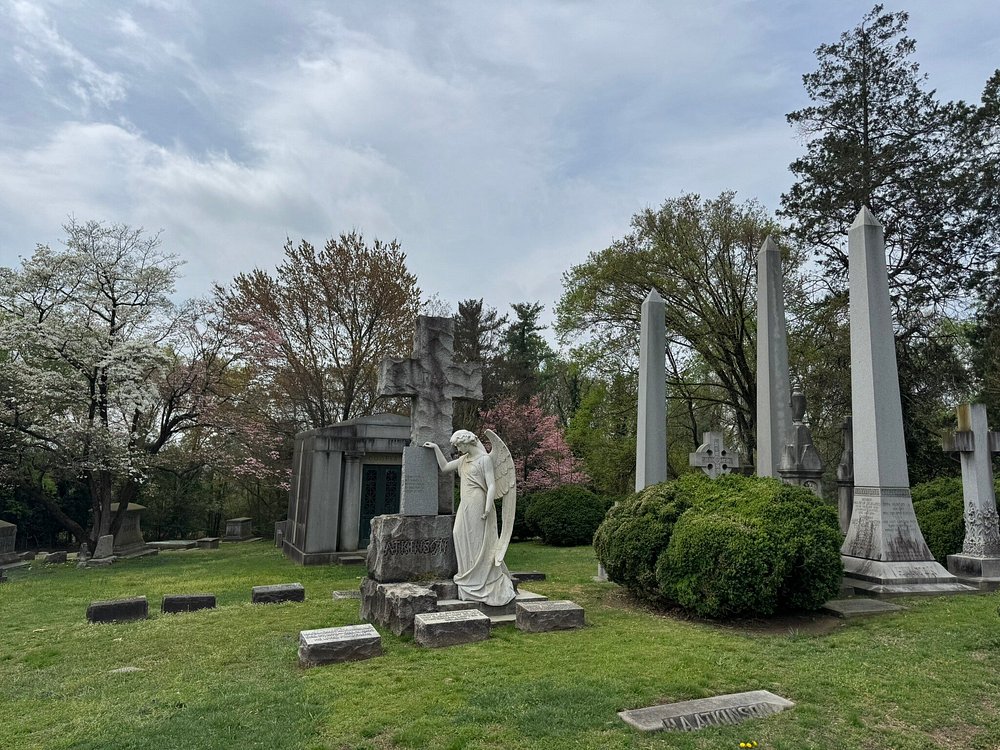
The two-mile loop of Hollywood Cemetery asks for the same quality of presence, on a more intimate scale. Walk it slowly and you will pass through ground that carries the full weight of American contradiction: war and union, loss and continuance, the honored and the forgotten lying side by side. You will pass the graves of enslaved people buried in unmarked plots at the cemetery’s edge — lives that built the city now visible across the river, largely absent from the stone monuments that surround them. You will feel the incompleteness of the historical record, the way certain silences in the ground are themselves a form of testimony. The walk does not offer resolution. It offers encounter — and encounter, sustained over time, is how reconciliation begins.
The Practice of Returning
Hollywood Cemetery is a living institution — still accepting new burials, its newest graves sitting alongside the oldest with the democracy that death has always insisted upon. It is also a registered arboretum, its ancient oaks and hollies part of the record. The living landscape and the historical ground are inseparable here, as they are everywhere, if we are willing to see it. The trees that shaded Confederate soldiers now shade the children of a city that has changed enormously and is still changing. Nothing here is settled. Everything here is continuing.
The monks did not finish their walk and declare peace made. They finished it and went home, carrying what they had learned in their feet and their patience. That is all any of us can do with a place like this. Go slowly. Let the ground speak. Come back. Reconciliation is not an event — it is a practice, and this two-mile loop through 135 acres of American history is as good a place as any to begin.
Pingback: Walk Dates - Walk for Peace RVA