A visit to the Amelia Wildlife Management Area (WMA) in central Virginia turned into something I didn’t plan- a reckoning with the ground beneath my feet and the history buried inside it.
I’ll be honest with you: I almost didn’t go.
Amelia Court House is not that far away. It didn’t seem like enough of a difference in scenery to justify driving an hour away for being out in Nature with friends when I have Nature right here.
It felt like something I could do “another time.” But I went anyway.
I was just looking for a quiet night under the big sky with friends. I found something else entirely.
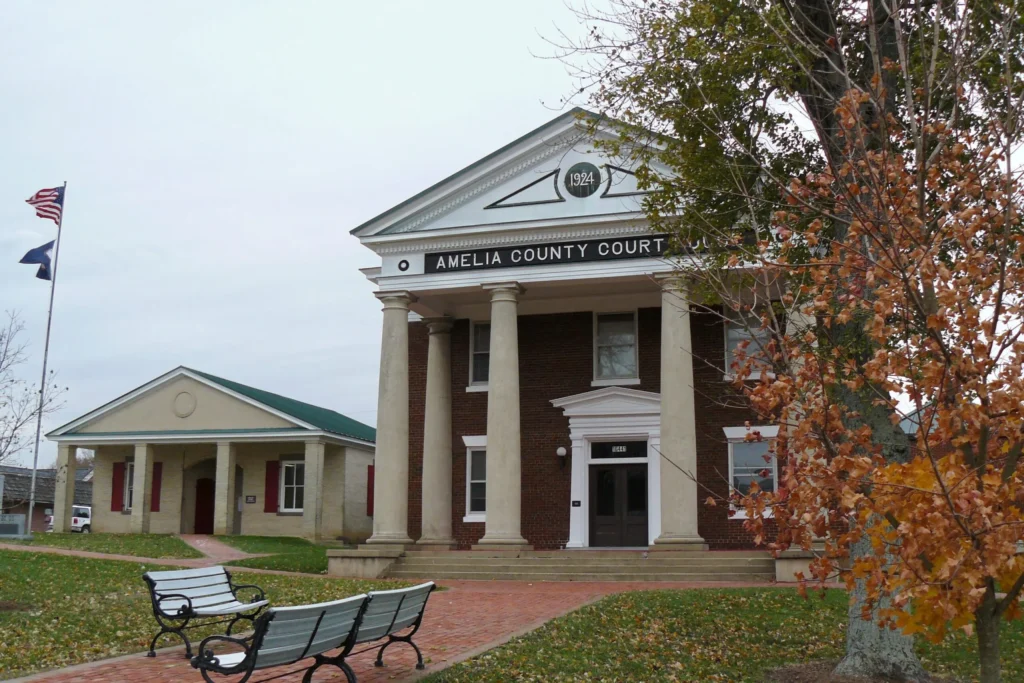
The moment the ground starts talking
The Amelia WMA doesn’t announce itself. There’s no dramatic entrance, no sweeping vista when you first arrive. You park, you walk past the gate, and the world goes quiet. The Appomattox River runs along the northern edge. Deer tracks cross the trail ahead of you. A hawk circles somewhere overhead. It feels, honestly, like the most peaceful place in Virginia.
That’s what made what I learned later hit so hard.
I walked through the eerie silence with a friend wondering where all the sounds of wildlife were — when I stopped and looked around and thought: someone farmed this land. Someone woke up here every morning and worked this soil. And then I thought about who that was, and what that meant, and the peaceful morning got a lot more complicated.
The ground at Amelia Court House has held more hunger, more grief, more desperate hope than most people realize. And most of it happened in about 48 hours.
What Robert E. Lee was waiting for, right here
Here’s the part of the story that stopped me cold when I read it afterward.
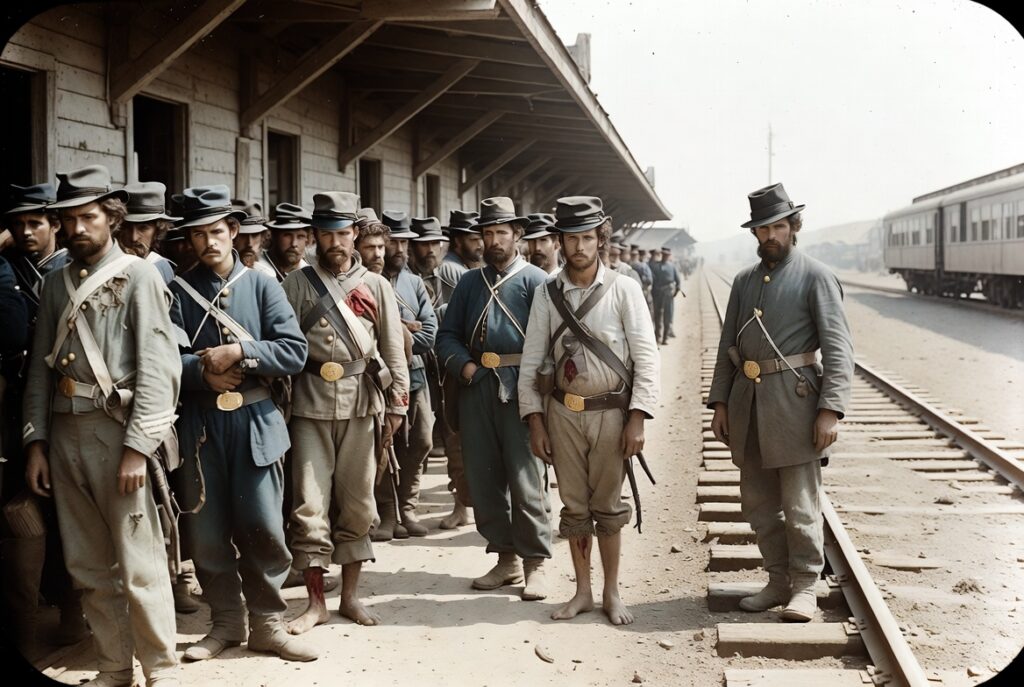
In April 1865, with Richmond fallen and the Confederacy collapsing, General Robert E. Lee led tens of thousands of men westward — exhausted, starving, many without shoes — straight toward Amelia Court House, Virginia. He’d been told that supply trains full of food and rations were waiting for his army on the Richmond and Danville Railroad.
They weren’t there.
Lee arrived on April 4th and found nothing. He spent two days — two days, right here — sending wagons into the surrounding countryside to forage for food while his men waited. Those two days cost him everything. Union forces closed in during the delay. Lee was forced to retreat again toward Farmville and then Appomattox. Before he got there, the Battle of Sailor’s Creek — just 29 miles from where I was standing — consumed nearly 8,000 Confederate soldiers in a single afternoon on April 6th.
Five days after Lee waited in vain for supplies at Amelia Court House, he surrendered at Appomattox.
Whether you know that or not, if you’re sensitive, you can feel them watching, waiting. The woods are full of them.
The people the history books skip over
But here’s where my mind kept returning to: Lee’s army arrived to find the land stripped of food because that’s what armies do. They take. The people who actually lived on this land — the enslaved men and women who had farmed these fields for generations — had no say in any of it. Their labor had built what everyone else was fighting over. Their names are largely unrecorded. None of their stories made the dispatches.
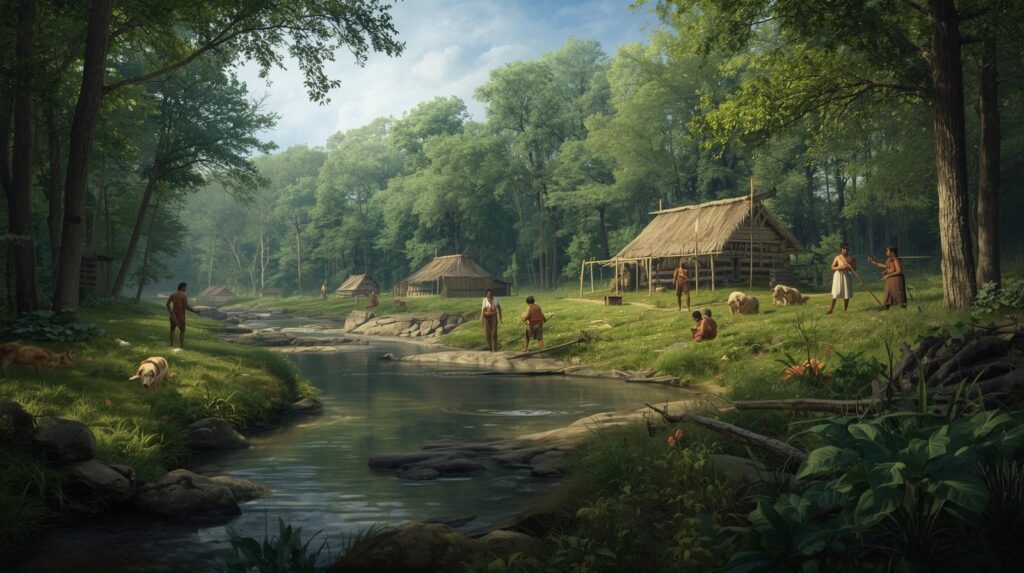
The Powhatan people lived along the Appomattox River centuries before any of this. They fished these waters, built communities here, understood this landscape in ways the later arrivals never fully would. They were displaced first, before the tobacco, before the courthouse, before the railroad and the war.
Walking the Amelia WMA trails, I thought about all the layers of people who had moved across this same ground. Every one of them had hopes. Every one of them was somebody’s family member. And the ground they all walked on is, right now, being gently reclaimed by deer and hawks and wild turkey and beaver along the Appomattox.
“There’s something almost radical about restoration — the idea that land that was taken and depleted can, slowly, become generous again.”
The mine, the crystals, and the thing that surprised me most
There’s one more layer to Amelia Court House, Virginia history that I hadn’t expected: the ground here is literally full of gems.
The Morefield Mine, a short drive from the WMA, has been producing amazonite — a vivid blue-green feldspar almost unique to this region — since 1929. Silas Morefield was hunting his own land and blew open a rock outcrop on a hunch. The mine eventually produced over 80 different mineral species. During World War II, the U.S. government took it over to mine mica and beryl for the war effort.
The same land that watched an army starve. The same land that held centuries of enslaved labor. Quietly, underneath all of it: crystals.
I’m not sure what to do with that image. But I haven’t been able to let it go.
Why I think you should go — and why it matters
I’m not writing this as a history lesson. I’m writing it because I went to the Amelia Wildlife Management Area for a some time in Nature and came home thinking differently about peace.
Peace, I think, isn’t the absence of what happened. It’s what you build when you’re honest about it. The Amelia WMA is beautiful — genuinely, quietly beautiful. People fish Amelia Lake for largemouth bass and crappie. There’s miles of hiking trails through hardwood groves. You can kayak the Appomattox River. You can sit in a field at dusk and watch wild turkey move through the tall grass. All of that is real and worth your time.
But you can also do something harder and more worthwhile: you can let yourself feel the weight of what the ground holds. The hunger of 1865. The centuries before that. The slow return of wildness to land that was once stripped bare.
The combination of beauty and grief – held at the same time- is what I walked away with. And I think it might be the most honest version of peace available to us.
So go. Take the drive down Route 360. Turn onto Kennon’s Lane. Walk to Saunders Pond. Stand there for a minute and let the place talk.
It has a lot to say.
Pingback: Picnic for Peace RVA- FAQ - Walk for Peace RVA
Pingback: Walk Dates - Walk for Peace RVA